
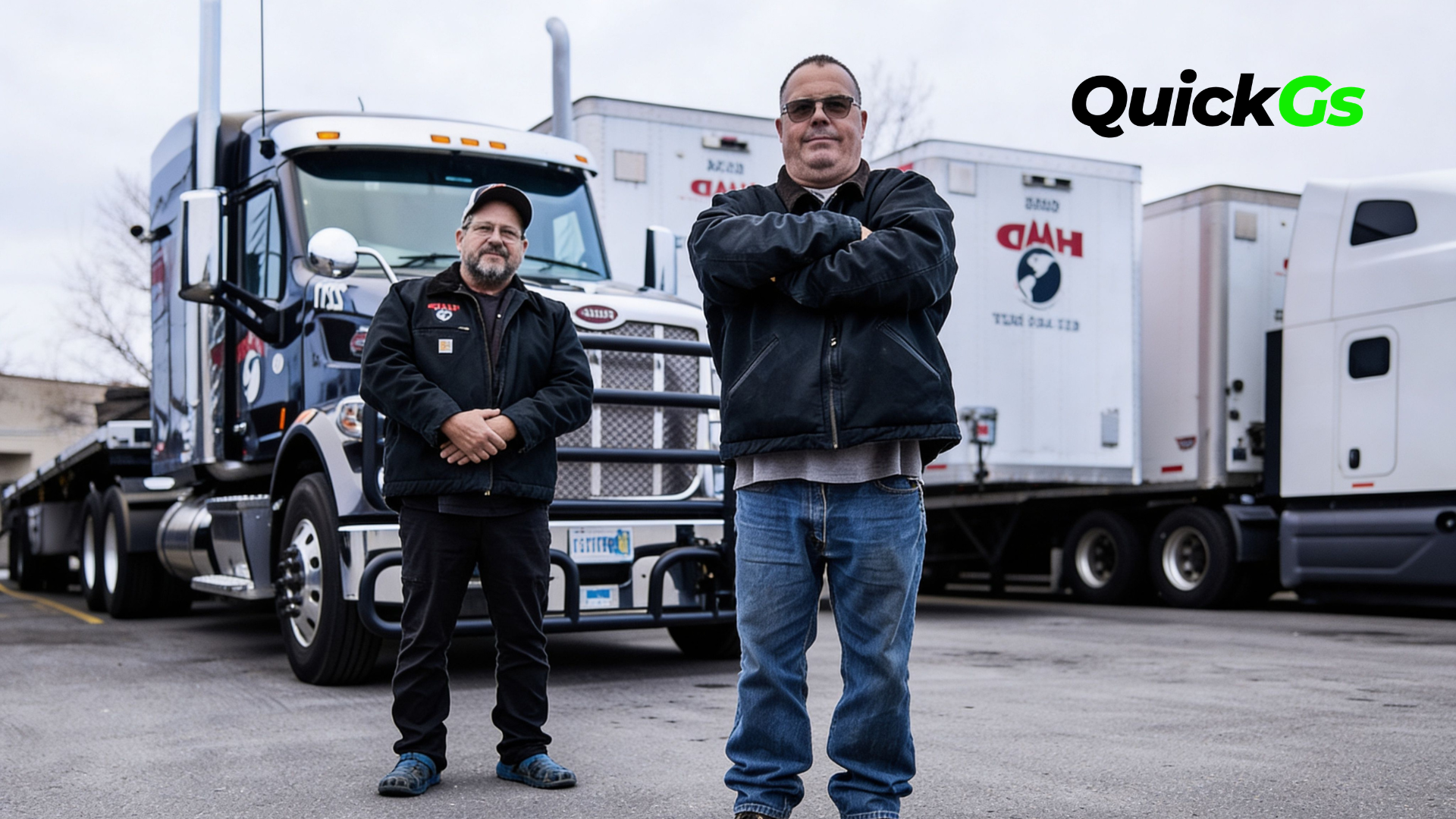

Introduction to Owner-Operators in Trucking
Owner-operators play a critical role in the trucking industry, serving as independent contractors who own or lease their trucks and provide freight transport services. Unlike company drivers, owner-operators have the autonomy to select their loads and routes, giving them flexibility that can be appealing. However, this independence comes with a unique set of responsibilities and challenges that can significantly impact their financial stability.
The entrepreneurial nature of being an owner-operator requires individuals to manage not only driving but also business operations. This includes handling expenses such as truck maintenance, insurance, fuel costs, and administrative tasks. Many owner-operators find themselves busy on the road, striving to maintain a steady flow of work to cover these expenditures. Despite their efforts, a significant number of them report struggling financially, raising questions about the sustainability of this business model in the long haul.
The trucking industry itself is highly competitive, with fluctuating freight rates and a constant demand for reliable service. Owner-operators often face the reality of low profit margins, which can lead to financial strain. Even when they are productive meaning they are transporting goods efficiently and on time they may still encounter profitability issues due to high operational costs and market volatility.
This dichotomy between productivity and profitability is a topic of growing concern among owner-operators. This blog post aims to delve deeper into the financial struggles faced by these individuals, exploring the factors that contribute to their challenges and the strategies they can implement to improve their financial outcomes. Understanding the balance between their responsibilities as truckers and the economic realities they encounter is essential for anyone interested in the trucking industry.
Defining Productivity in Trucking
In the trucking industry, productivity represents a multifaceted concept that encompasses various metrics which can significantly impact an owner-operator’s performance and profitability. Traditionally, productivity is often quantified through miles driven, deliveries made, and time spent on the road. Each of these metrics provides a different lens through which to evaluate performance, but it is crucial to understand that higher productivity does not automatically equate to higher income.
Miles driven is perhaps the most commonly cited metric for productivity in trucking. While it can indicate the physical output of a driver, it fails to account for factors such as fuel costs, vehicle maintenance, and operational downtime. Simply driving more miles can lead to diminishing returns if associated costs increase disproportionately. Similarly, the number of deliveries made in a given time frame serves as another productivity indicator, yet it too must align with income considerations. A driver who completes numerous low-paying loads may find that their productivity does not translate to increased earnings.
Another important variable is time spent on the road. While it is positive to have high utilization rates, owner-operators must also consider the quality of that time versus its efficacy in generating profit. Productivity should be evaluated not just quantitatively, but qualitatively, considering whether the time invested generates meaningful financial returns.
It is a common misconception that increased productivity is synonymous with greater financial success in the trucking industry. This view overlooks the complexity of expenses and market rates, emphasizing the need for owner-operators to assess productivity in conjunction with profitability metrics. Understanding these elements is crucial for navigating the financial challenges faced by trucking professionals.
Understanding Profitability in Trucking
Profitability in the trucking industry is a multifaceted concept that extends beyond simple revenue generation. While owner-operators generate income through freight transportation, it is crucial to differentiate between revenue total income before expenses and profit, which is the remaining amount after all operational costs have been deducted. Understanding this distinction is essential for owner-operators to gauge their financial health and make informed decisions.
Owner-operators face numerous costs that significantly impact their bottom line. One of the most substantial expenditures is fuel, which can account for a large portion of operational costs. Fluctuations in fuel prices directly affect profitability, compelling owner-operators to consistently monitor and manage fuel consumption to mitigate expenses. Additionally, regular maintenance is vital to ensure the longevity and efficiency of the truck, further contributing to overall profitability.
Insurance is another critical cost factor in trucking. Owner-operators must invest in various types of insurance, including liability and cargo insurance, to protect their assets and comply with regulations. The premiums on these policies can vary widely based on driving history and type of cargo, subsequently influencing profitability. Other costs, such as permits, tolls, and compliance with safety regulations, also play a role in reducing overall profit margins.
Moreover, the economic landscape can significantly affect an owner-operator’s ability to maintain profitability. Market conditions, including demand fluctuations and competition levels, directly impact freight rates, which in turn affect revenue. This interplay of costs and external factors highlights the complexity of managing a profitable trucking operation, where productivity alone does not guarantee financial success.
The Cost of Running More Miles
For owner-operators in the trucking industry, the decision to run more miles often carries significant financial implications. While it is true that higher mileage can potentially result in increased revenue from freight loads, it is essential to analyze the corresponding rise in operational costs that accompany longer trips. These costs encompass fuel consumption, maintenance, and wear on equipment, all of which can substantially affect an operator’s financial stability.
Fuel expenses are one of the most critical factors to consider when evaluating the cost of running more miles. As mileage increases, so does the fuel consumption, leading to higher expenditure that might eclipse any additional income generated from the extra loads delivered. Moreover, fluctuations in fuel prices can exacerbate this issue, making it vital for owner-operators to maintain a keen awareness of fuel market trends to manage their overall operational costs effectively.
Additionally, with increased mileage comes an inevitable rise in maintenance requirements. Longer distances can lead to accelerated wear and tear on the truck, necessitating more frequent servicing, oil changes, and repairs that can accumulate significant expenses over time. It is crucial for operators to establish regular maintenance schedules to mitigate unexpected breakdowns and ensure the longevity of their vehicles.
Furthermore, considerations related to driver fatigue and downtime cannot be overlooked. Running longer distances without adequate rest can diminish driver effectiveness, potentially leading to safety issues or delays that can further strain profitability. Therefore, establishing a balance between miles driven and the associated costs is imperative for owner-operators. The optimal strategy is not solely to maximize the distance traveled but to consider a comprehensive view of the financial health of the operation, ensuring that every mile contributes positively to the bottom line.
Common Pitfalls of Productivity-Centric Mindset
For owner-operators in the trucking industry, the pursuit of productivity is often seen as a pathway to success. However, focusing excessively on maximizing output can inadvertently result in numerous pitfalls, potentially hindering both operational effectiveness and financial viability. One prevalent issue is burnout. Owner-operators frequently work long hours to meet delivery schedules and maximize their driving time. This relentless pursuit of productivity can lead to fatigue, making it difficult for them to maintain the necessary concentration and alertness on the road. Studies have shown that decreased mental and physical health can significantly impact the driving performance, raising the risk of accidents and safety violations.
Another common consequence of a productivity-centric approach is the rise in operational costs. Owner-operators may push their vehicles to the limit, disregarding recommended maintenance schedules in order to meet pressing production demands. This neglect can lead to mechanical failures, costly repairs, and extended downtime, ultimately counteracting the original goal of increasing profitability. The necessity to reduce travel time can also push these operators to choose faster, more expensive routes or to operate without proper breaks, further inflating expenses.
Furthermore, a narrow focus on productivity may result in the disregard for proper financial management. Owner-operators might overlook crucial factors such as optimizing fuel consumption, managing permits, or considering load profitability. For instance, there are cases where owner-operators selected high-volume routes that, although busy, were not financially rewarding when factoring in variable costs, such as tolls and fuel expenses. These examples underscore the need for a balanced approach, where productivity is seen as only one component of the broader goal of ensuring a sustainable and profitable trucking enterprise.
Strategies for Balancing Productivity and Profitability
For owner-operators in the trucking sector, achieving a balance between productivity and profitability is essential for sustainable success. The following strategies can be instrumental in navigating the complexities of the industry.
Firstly, optimizing routes is key. Utilizing advanced routing software can significantly enhance efficiency by identifying the shortest and most fuel-efficient paths. These tools can analyze traffic patterns, weather conditions, and road closures, allowing operators to avoid unnecessary delays. By optimizing routes, not only is productivity enhanced, but fuel costs can also be reduced, thereby improving overall profitability.
Secondly, managing fuel costs is crucial for maintaining profitability. Implementing fuel management practices, such as purchasing fuel at discount stations or utilizing fuel cards that offer savings, can substantially reduce expenses. Additionally, regular vehicle maintenance ensures that engines perform optimally, thereby enhancing fuel efficiency. The integration of monitoring systems to track fuel consumption can also provide insights into driving habits, enabling necessary adjustments to save costs.
Furthermore, knowing when to decline unprofitable hauls is a skill that can protect an owner-operator’s bottom line. While it might be tempting to accept every job offer to maximize productivity, evaluating the profitability of each load is vital. Analyzing factors such as distance, load size, and time commitments can provide a clearer picture of whether a particular haul is worth undertaking. This discernment can prevent the draining of resources and time on less profitable jobs.
Lastly, continual education on market trends and economic fluctuations can aid owner-operators in making informed decisions. By staying updated on industry standards, market rates, and fuel prices, operators can strategically position themselves to seize profitable opportunities while avoiding pitfalls.
Case Studies: Successful Owner-Operators
In the competitive realm of trucking, owner-operators often grapple with the dual goals of maximizing productivity and profitability. However, several owner-operators have turned these challenges into opportunities, achieving significant financial success. This section delves into the experiences of a few such individuals, highlighting their strategies and lessons learned.
Take, for example, Michael, an owner-operator from Texas who specializes in hauling refrigerated freight. He emphasizes the importance of scheduling and route optimization. By leveraging technology, he uses route planning software to minimize fuel consumption and downtime, thereby increasing his overall productivity. Michael’s commitment to maintaining his equipment also plays a crucial role in his success; he understands that a well-maintained truck not only reduces repair costs but also ensures fewer delays in service.
Emily, another owner-operator based in Florida, has built her reputation by focusing on niche markets within the trucking industry. By hauling specialized goods, she has been able to charge premium rates, significantly boosting her profitability. Emily’s success didn’t come without its challenges; she recalls the early days of her operation, where managing cash flow was a constant struggle. To address this, she sought financial education, learning about budgeting and forecasting, which ultimately laid the groundwork for her sustainable business model.
Finally, we can look at Carlos, who emphasizes the importance of customer relationships in the shipping industry. He notes that establishing trust with his clients has led to repeat business and referrals, which are essential for maintaining high productivity levels. Carlos actively communicates with his clients to understand their needs and preferences, tailoring his services accordingly. This customer-centric approach has contributed substantially to his profitability.
These case studies underline that owner-operators can achieve both high productivity and profitability through strategic planning, financial management, and a keen focus on their unique market niches. The shared experiences of these successful individuals serve as valuable insights for others looking to navigate the complexities of the trucking industry.
The Role of Technology in Enhancing Profitability
The trucking industry has witnessed significant advancements in technology, which play a vital role in helping owner-operators enhance their profitability. Owner-operators face the dual challenge of managing daily operations while ensuring financial stability. Intelligent adoption of technological tools can streamline processes and reduce unnecessary costs, ultimately leading to improved profit margins.
One of the most impactful technological innovations is routing software. This type of software helps owner-operators optimize routes based on real-time data, including traffic conditions, weather forecasts, and road closures. By utilizing this technology effectively, operators can reduce fuel consumption and minimize delivery times, leading to lower operating costs and ultimately enhancing profitability.
Additionally, fuel management systems are crucial for owner-operators looking to control one of their largest expenditures. These systems provide insights into fuel usage, allowing operators to analyze their fuel efficiency and make informed decisions about route planning and fuel purchases. Advanced fuel management tools can alert drivers to fuel price trends and help identify the most economical fueling stations.
Accounting tools are another critical component in streamlining financial operations for owner-operators. Automated accounting software helps manage invoicing, expenses, and financial reporting, which not only saves time but also minimizes human error. By maintaining accurate financial records, owner-operators can better analyze their profitability and make informed business decisions.
In conclusion, technology significantly contributes to enhanced profitability for owner-operators in the trucking industry. By leveraging routing software, fuel management systems, and automated accounting tools, operators can optimize their operations and reduce costs, ultimately supporting their financial success in a competitive market.
Conclusion: Reevaluating Success in Trucking
As we have explored in this article, the distinction between productivity and profitability is crucial for owner-operators in the trucking industry. Many individuals equate being busy with becoming profitable, yet this misconception can lead to financial strain and unsustainable practices. Owner-operators often find themselves caught in a cycle of long hours and high operational demands, yet their financial returns may not reflect the effort expended. This realization necessitates a careful reassessment of what constitutes success in the trucking sector.
Agricultural and logistics markets increasingly emphasize efficiency, making it imperative for owner-operators to focus on an optimal balance between load booking and financial health. Streamlining operations, managing expenses effectively, and exploring diverse revenue streams are instrumental strategies that can significantly improve profitability without sacrificing productivity. Additionally, cultivating relationships with reliable clients and strategically selecting routes can lead to more lucrative contracts that enhance overall earnings.
In the evolving landscape of the trucking industry, adopting a metrics-driven approach to evaluate both productivity and profitability is vital. Owner-operators should actively monitor their financial performance against their workload to ensure they are not only working hard but also working smart. By aligning daily tasks with long-term financial goals, owner-operators can achieve a more sustainable and rewarding business practice.
Ultimately, success in trucking should be viewed through a multifaceted lens, considering both productivity and profitability as indispensable components of a thriving enterprise. By redefining success and implementing practical strategies that promote financial health alongside operational efficacy, owner-operators can navigate the complexities of the industry with greater confidence and resilience.